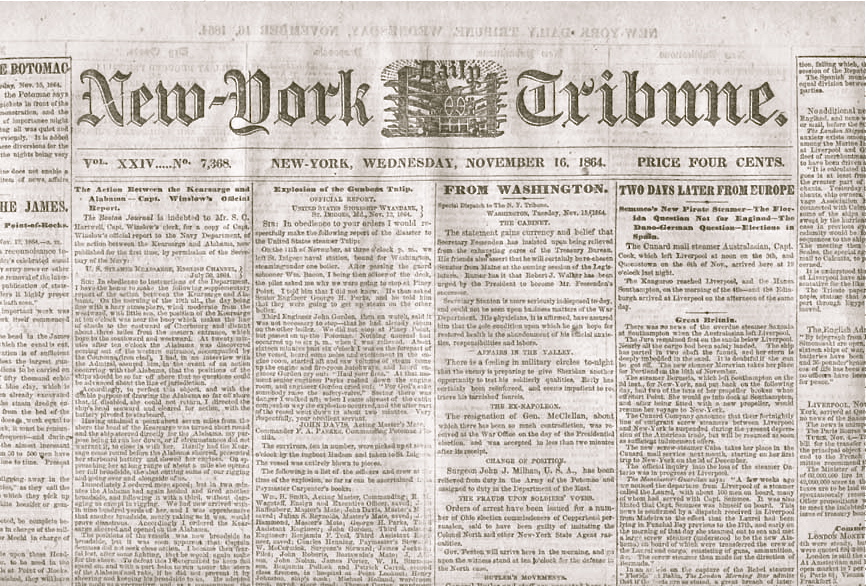
Browsing 19th-century Periodicals

The digitization of 19th-century materials has changed the way literary scholars can research. As a result, we’re both finding new works by established authors (like two new Walt Whitman texts, found by the same graduate student months apart) and works which need more attention. Sometimes looking through the pages of a particular journal can be a window on the changing ideas and fashions of a particular audience.

In this assignment, you group will be working to select a text for deeper investigation, eventually publishing an edited version with historical and literary notes.

The first step will be to browse through 19th-century periodicals and find texts that interest you because they spark interesting historical and literary questions.

Use the Making America Archive from Cornell University

This collection contains generally well-known American periodicals. The scans are usually high-quality.

Making America Journals from Cornell: http://collections.library.cornell.edu/moa_new/browse.html

Limit Your Browsing to issues from 1837-1870.

This is mostly an arbitrary limit. The earliest issues from the Cornell collection are from 1837. The American Civil War ended in 1865, so through 1870 you’ll see articles related to the war and Reconstruction.

Take Notes and Keep Links to Stories to Share with your Group

You can use a shared Google Doc or in your group’s Slack channel (created once your group is created). Share interesting articles with a link and maybe jot down initial reactions, questions, why it might be interesting to explore. Include links so you can find the articles.

If each group member finds 5-10 good stories or essays, you’ll have lots of options for the text you’ll collaborate on. You have to work on that text for a few weeks, so you want something that will keep everyone’s interest and attention.

Don’t do this all at Once

Reading pages of a 19th-century magazine online can get tedious. Spend a few minutes a day browsing or, if the digitized copy you have includes a table of contents, skip around to titles that seem the most interesting.

Definitely Post Questions to Slack

About history, context, more detailed instructions. This is the first time I’m trying something exactly like this and there’s bound to be some snags, but also you’ll be jumping into the wide, weird wold of 19th-century pop culture. You might have all kinds of questions and those are great to share.
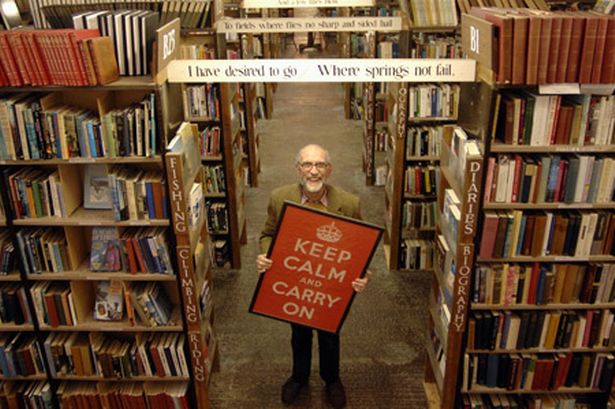
How We’ll Carry On. . .

“Under certain circumstances failing, losing, forgetting, unmaking, undoing, unbecoming, not knowing may in fact offer more creative, more cooperative, more surprising ways of being in the world. [. . .] What kinds of reward can failure offer us? Perhaps most obviously, failure allows us to escape the punishing norms that discipline behavior . . . Failure preserves some of the wondrous anarchy of childhood and disturbs the supposedly clean boundaries between adults and children, winners and losers. “

(Halberstam 2-3)

You may have taken an online class before and had a good experience. A well-designed online course is quite effective. Don’t expect that here. This won’t be as effective as a thoughtfully-devised online course and it won’t be as effective as our in-person classes. So let’s jettison the goals of “effectiveness” and “efficiency” for goals that were perhaps more worthy anyway, such as “sharing” and “curiosity.” As noted theorist Jack Halberstam suggests in the epigraph above, if a “successful” course is one that meets a very narrow set of standards, by acknowledging we’ll be a failure, we’re embracing all those other forms our community and learning can take. Let’s fail spectacularly

Let’s also try not to lose our minds. There will be glitches and miscommunications. Don’t sweat them. If you’re not sure about an assignment, or you miss a notification and realize a week later, don’t worry. Send me an email or visit my online office hours (details below). One benefit of being a failure is that we have flexibility. I’ll be doing all I can to help you get the grades you’re aiming for.  

I know that your situation at home is likely chaotic (or excruciatingly monotonous). We’ll be setting up a weekly routine with similar assignments so you know what to expect.

Tools

We’ll be using this course website, email, and Slack for the remainder of the course. If you’re seeing this, you’re already on the course website. You’ve also probably emailed me and received a response. I’ve sent a Slack invitation to you via the email address CUNYFirst has, usually it’s your QC email. If you don’t see my invitation, send me an email and I’ll reinvite you.

Schedule

The schedule page has been updated to reflect our move online. You’ll see that right now, only assignments through 3/26 are posted. That will change in the coming days. Generally, though, I’ll post assignment on the Thursday before they’re due.

Questions

Most of the question that will arise we’ll hash out on Slack, so head there first. If you can’t get on to Slack, though, email me.

The road of love is never smooth

At first Theseus and his fiancee Hippolyta discussed their wedding, Theseus was very impatient to marry Hippolyta. And it is very nice for Theseus to get his love. But it contrasts with Hermia’s subsequent pursuit of her own love. When Egeus brought his daughter Hermia to seek the help of Theseus. Egeus promised to marry Hermia to Demetrius, and Demetrius also loved Hermia’s. But Hermia only liked Lysander and refused to obey her father. So Egeus demanded punishment for Hermia. As we read “Like water for chocolate” before, Hermia’s path to love was blocked by her parents. Parents should not be an obstacle for their children to find their own way of love, on the contrary, they should help their children in the right way. But only help, the real decision should be in their own hands.

Theseus told Hermia that if she did not obey her father, Hermia would be executed. Knowing that Demetrius’ love was fickle, but Theseus also made Hermia decide whether to obey his father’s arrangement or die. Theseus, who was about to marry and be happy, did not help Hermia to be happy. Why is that? Is it because Theseus’s emotional path is so smooth? Either way, Hermia and Lysander did not want to give up on each other, so they decided to elope. Hermia’s friend Helena was ready to tell Demetrius about their plans, hoping to redeem Demetrius’ love in this extreme way. Whether Hermia or Helena, their path of true love is not smooth, but they all strive to pursue their own happiness in their own way. Only Helena’s pursuit of her own happiness is not the right way. Her way will sacrifice the happiness of others, which is not good.

After that, the story the workers decided to stage was a little similar to Hermia’s love story. In this story, two people are in love but their love is prevented by their parents. Then they also eloped, but on the way to elope, because of some misunderstanding, let the two people end their own lives. So in overall, the road of love is never smooth, in the road of love should not be hindered by those unfair things. Of course, some opinions can be accepted, after all, sometimes others will build their own happiness on the pain of others. In addition, the story of the pyramid tells us that the road of love will not be smooth, love will make people pay the price of life, so to think calmly, with the right way to pursue their own love, parents can not force their children too tight, otherwise, the consequences will make them regret.

Theseus: Ignorant or Heartless?

Right off the bat we are introduced to to Theseus and Hippolyta, names already widely known to many owing to their place in Greek mythology . The reader is immediately told of Theseus’ excitement towards marrying Hippolyta. It seems a safe bet to say that this marriage is not only something Theseus is looking forward to, but something he actually sought out. Yet this stands in stark contrast with what Theseus expects of Hermia. Hermia is clearly in love with Lysander, yet Theseus expresses the fact that she must instead marry Demetrius. Not only that, but Lysander actually wishes to marry Hermia, so it is not as if Hermia would not have a spouse if she did not marry Demetrius. The justification for this decision is that it is the law. That a daughter must obey her father’s wishes or she can be killed. Yet this still does not explain how Theseus can make Hermia go through with what she clearly does not want to go through with. How could Theseus, a character clearly in love and about to get married, be so blind to the love of another? Is he really so blind to the hypocritical nature of his decision? Marrying someone he obviously wants to marry, yet denying that very thing to another? Either that is in fact the case and he is very unaware of what seems to be playing out before him. Or he is deliberately making the decision that he has made, despite his knowledge of Hermia’s feelings. The incredulity of the situation is increased when Theseus gives Hermia an ultimatum. He allows her until his own wedding day to make the decision. Either marry Demetrius or be put to death. On the day of his Theseus’ own wedding! This does not leave much room for the possibility of Theseus being an individual ignorant of his surroundings and the particulars of Hermia and her feelings. He has not just given Hermia time to make the decision in an attempt to appease her in some way. He has decided to do so in the most painful way possible for Hermia. Here is Hermia being told not only that she will be denied her true love. But that if she does not marry Demetrius, someone she does not have feelings for, she will be put to death. And to make it all worse, Hermia has until Theseus’ wedding to make the decision. A wedding Theseus himself is clearly willing and exciting for!

Insights about Theseus’s character

Theseus tells Hippolyta that he can’t wait the 4 days until their wedding because it’s too long and tells Philostarates to get all of the Athenian youth excited and happy for the wedding. You’d think a guy like this would be the biggest supporter of love. The second Egeus asks him to punish his daughter Hermia for wanting to marry the man she loves, Theseus agrees with Egeus and tells her to marry Demetrius (the man she doesn’t love). He even tells her that she has until his wedding day to choose between death, being a nun, or marrying Demetrius. Theseus is a hypocrite! Even on a day that’s a celebration of love he’s keeping Hermia away from it. To make it ironic, in act II the workmen talk about putting on a play at the wedding of Theseus and Hippolyta. The play they decide to do is the story of Pyramus and Thisbe. In this story, two people are in love but their love is banned by their parents. That is exactly what is happening here. Hermia’s love to Lysander is banned by her father. In the end of the story Pyramus and Thisbe, they both end up killing themselves out of love for the other. If their parents hadn’t banned them from being together from the start, no one would have died. The irony is that at Theseus’s wedding, which is the day he’s making Hermia choose which way she’d be denied love, they’re performing a play about a tragedy that happened because of banned love.

It’s also possible that Theseus isn’t a supporter of love at all. The only information we have so far is that he’s banning two lovers, and he’s getting married himself. The fact that he’s getting married doesn’t prove that he’s a supporter of love. It’s possible Hyppolyta doesn’t love Theseus at all. We know she doesn’t think 4 days is so long to wait for the wedding, that could be because she doesn’t love Theseus. We also know they first met in battle and it’s possible the only reason she’s marrying him is because she’s forced to as an outcome on that battle. It’s true he claims he won her love when she was injured, but it could be in truth she was forced into it and he only truly cares about himself.

*Watch* LWFC

I’ve placed a link to the movie version of the novel. It’s very similar to the novel since Esquivel wrote it herself and she originally conceived of the novel as a move. It may be helpful to explain some scenes, but it also makes some changes. Sometimes the changes are significant (we find out much earlier, for instance, that Mama Elena had another lover, meaning we spend more time possibly being sympathetic for her). Some are minor.

It’s on the Resrouce page under the director’s name “Arau, Alfonso” (so it’s right at the top).

Summaries

Jan

Crying
Christmas rolls remind of Tita
Pedro pops Q and accepts Rosaura on Tita’s cold night.  

Feb

Tragic wedding
Nacha’s death remembering her lost lover
Tear-filled icing
Mama’s warning

Mar

Bloody thorns
Quail in rose petal sauce
The new ranch chef

Apr

Robert’s birth
Tita’s a mother without giving birth
Tita and Pedro finally together?

Tita’s breast become experienced under Pedro’s gaze
Rosaura gives birth
John’s praise and interest in Tita

May

Roberto’s death
Tita’s breakdown
Mama Elena shows a strong personality
Tita against Mama Elena

Jun

Tita’s cold, quiet, with doctor
Contemplates suicide
John explains Grandma, how matches need a match
Tita communicates

Jul

Elena and Chencha’s calamity
Death, rape
Nacha’s omnipresence
Tita’s understanding and engagement
Pedro not letting love go!

Aug

Tita engaged
Esperanza and Tita’s shared fate
Sexual tension resolved
Mama’s Elena’s ghost

Sep

A pregnancy scare causes conflict
Reoccurring pasts brought up again: relationships, hopes and pains

Oct

Tita and Pedro expecting
Gertrudis advises Tita
Elena’s last visit
Pedro burned, baby gone
John’s back

[Resource]: Photos from the Mexican Revolution

Complete

“Mexican-American Border Region–Pictorial works” – It should be unsurprising that the U.S. saw the Mexican Revolution as a threat, especially with the U.S. Civil War only two generations past. Additionally, U.S. companies had significant investment in Mexico that was directly threatened by Mexican revolutionaries who saw these companies as in league with wealthy land owners to mistreat the common folks. Raids by warring military bands threatened civilians on both sides of the border and also created refugees. This collection of black-and-white photographs and some colored prints shows a strong, favorable bias towards the U.S.

Collection Highlights

“General staff of the Mexican Army in the council room of Huerta” – The European influence on the Mexican upper-class is apparent in the uniforms and fashions of the Federal army. Remember also that Diaz was quite old when he left office, and the age of these officials echoes the Diaz regime.

“Mexican Federal Army officers in uniform taken just before the U.S. took Vera Cruz” – The U.S. military briefly occupied the Mexican city of Veracruz in 1914 over a diplomatic dispute. The occupation was deeply embarrassing to the Mexico and fueled popular sentiment that the Mexican government was in the pocket of U.S. businesses. In this photo, more European-style uniforms can be seen along with the civilian clothes worn by the wealthy at the time. Tita’s family is likely in this circle of society.

“Naco, Sonora, federal soldiers at rest stacked arms” – Picture of Mexican Army soldiers.

“Naco, Sonora. Fed. soldiers with soldadera in trench” – The Mexican military was poorly funded, however, and this photo shows that not all soldiers had everything they needed. This photo also shows a soldadera, usually a wife of a soldier who traveled with the army and supported the camp, sometimes even fighting on the front lines. Soldaderas more famously fought alongside rebels, as Gertrudis does.

“Rebel soldiers, Matamoros, Mex” – In contrast, the rebel groups are often made up of poorer people.

“Pancho Villa” – Francisco Villa is one of the most well-known rebel leader in Northern Mexico. Chencha tells tall-tales about Villa’s men eating the hearts out of their victims, echoing both anti-rebel propaganda and indigenous Aztec imagery. Villa was like many rebel leaders who often used the image of the peasant underclass as a symbol for their movement and so would famously don peasant dress for propaganda. This image is from the Library of Congress.

“Carranza Commander in Chief of the rebel Mexican Army / Villa Major General of the Rebel Mexican Army.” – While rebel leaders tried to show they were men of the people by dressing like the poor, they also had to prove that they were responsible future statesmen. In this photograph, Villa and another rebel leader wear European-style uniforms to emphasize their legitimacy.

“Gen. Francisco Villa, shot those canon balls holes. . .” – War produces casualties. When everyone is happy about the turkey mole, Tita remarks that it is a happy moment amidst the death, famine, and destruction the war brings. In this photo, small girls point to the canon ball holes in a local building.

“Refugees at the border awaiting admission to the U.S.” –
A “picture postcard” was a popular souvenir at the time. This shocking post card shows the U.S. military facing down refugees attempting to legally cross into the United States. Chencha is described as crossing this border under the watchful eye of both nations’ armies when she comes home from visiting Tita at Dr. Brown’s. Pedro is detained at this border when Rosaura is giving birth. You might also imagine Pedro and Rosaura as refugee (if you give less credence to the Pedro/Tita relationship and imagine that perhaps Mama Elena just wanted the new family out of harm’s way).

“Electrically-charged wire fence around refugee camp Ft. Bliss, Tex” – Cattle country was beginning to get electrified fences, now common on farms. In this shocking colorized picture postcard, the text draws attention to the use of electrified fence around the refugee camp at Fort Bliss, Texas. The image is strongly resonant with current claims about the treatment of asylum seekers on the U.S. Mexico border and the concentration/internment camps of World War II.

“Detained at the refugee camp” – A shocking photo of children in the refugee camp at Fort Bliss, Texas.